
Course
Small Bites
Serves
1 Quart
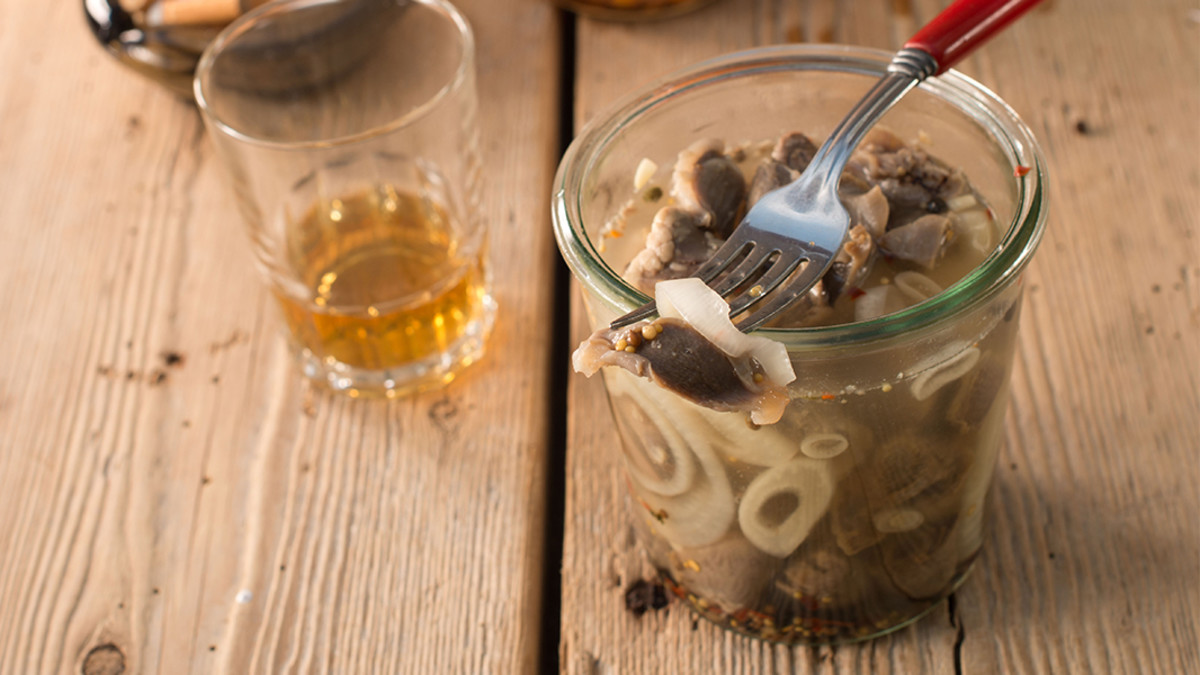
I like to save all of my game bird gizzards and hearts. I’ll freeze a few in the bottom of a quart-sized container, and then keep adding more and topping them off with water as I build my stash up to at least 1 pound of meat. Then I defrost them and make up a good pickling brine.
You want the hearts and gizzards in bite-sized pieces, so with larger birds like geese or turkeys it’s good to slice them down to halves or quarters. With grouse-sized or smaller birds, leave them whole. It’s a bit of a process and takes a couple of weeks from start to finish, but it’s well worth it. In the end, you can kick back with some friends at the table, poppin’ pickled giblets with crackers and beers.
Ingredients
- 1 lb. bird giblets (gizzards and hearts), cleaned, trimmed, and if necessary, cut into bite-sized pieces
- Kosher salt
- 1 cup white vinegar
- 1/4 cup sugar
- 1 tbsp. multicolored peppercorns (substitute black if that’s what you have)
- 1/2 tsp. red pepper flakes
- 1 tbsp. pickling spice
- 3 cloves garlic, peeled and sliced
- 1 onion, peeled and sliced
Preparation
- Place the giblets in a 4-quart pot and cover with water.
- Add 2 teaspoons salt. Bring to a simmer and cook until tender.
- Drain the cooked giblets, rinse, and drain again.
- In another pot, combine 1/4 cup water with the vinegar, sugar, 1-1/2 tablespoons salt, peppercorns, red pepper flakes, pickling spice, and garlic cloves and bring to a boil.
- Layer the sliced onions and giblets in a 1-quart canning jar and top with boiling brine.
- Refrigerate the jar for a couple of weeks while the brine does its work, and then enjoy. For long-term storage, seal the lid according to a standardized, safe canning method. (I use the USDA guide; see below.)
- Chill the giblets in a fridge before serving, and use within a week of opening.Note: For more information about canning, go online and look for the USDA Guide to the Principles of Home Canning.
Stay in the loop with The MeatEater Newsletter
Shop
Related
Recipes
Spatchcocked Game Birds
(1)
Recipes
Gamebird Shish Kebabs
(1)
Recipes
Stuffed Turkey Breast
(0)The comments section requires Functionality cookies. Please enable Functionality cookies in Cookie Settings to view this content.
Pickled Game Bird Gizzards and Hearts
Course
Small Bites
Serves
1 Quart
I like to save all of my game bird gizzards and hearts. I’ll freeze a few in the bottom of a quart-sized container, and then keep adding more and topping them off with water as I build my stash up to at least 1 pound of meat. Then I defrost them and make up a good pickling brine.
You want the hearts and gizzards in bite-sized pieces, so with larger birds like geese or turkeys it’s good to slice them down to halves or quarters. With grouse-sized or smaller birds, leave them whole. It’s a bit of a process and takes a couple of weeks from start to finish, but it’s well worth it. In the end, you can kick back with some friends at the table, poppin’ pickled giblets with crackers and beers.
Ingredients
- 1 lb. bird giblets (gizzards and hearts), cleaned, trimmed, and if necessary, cut into bite-sized pieces
- Kosher salt
- 1 cup white vinegar
- 1/4 cup sugar
- 1 tbsp. multicolored peppercorns (substitute black if that’s what you have)
- 1/2 tsp. red pepper flakes
- 1 tbsp. pickling spice
- 3 cloves garlic, peeled and sliced
- 1 onion, peeled and sliced
Preparation
- Place the giblets in a 4-quart pot and cover with water.
- Add 2 teaspoons salt. Bring to a simmer and cook until tender.
- Drain the cooked giblets, rinse, and drain again.
- In another pot, combine 1/4 cup water with the vinegar, sugar, 1-1/2 tablespoons salt, peppercorns, red pepper flakes, pickling spice, and garlic cloves and bring to a boil.
- Layer the sliced onions and giblets in a 1-quart canning jar and top with boiling brine.
- Refrigerate the jar for a couple of weeks while the brine does its work, and then enjoy. For long-term storage, seal the lid according to a standardized, safe canning method. (I use the USDA guide; see below.)
- Chill the giblets in a fridge before serving, and use within a week of opening.Note: For more information about canning, go online and look for the USDA Guide to the Principles of Home Canning.