Popular searches
Articles
Series
Topics
Shop
Recipes
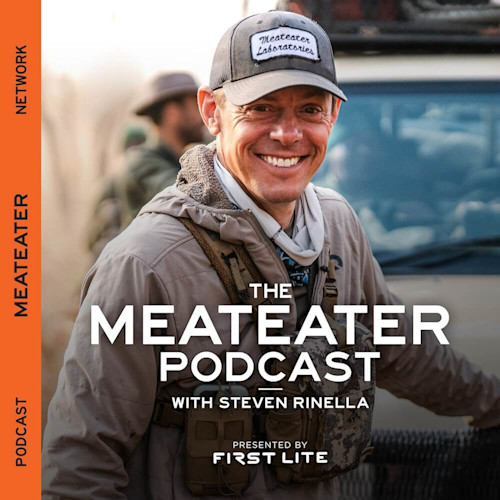
The MeatEater Podcast
Ep. 125: Live from Tempe
Play Episode
1h52m
Tempe, AZ- Steven Rinella talks with his big brother Matt Rinella, Dr. Karl Malcolm, and Janis Putelis of the MeatEater crew.
Subjects Discussed: Neanderthal hunting strategies; when an Arizonan draws a tag; the High Visibility and CSTB factors as they relate to turkey hunting; turning nine o'clock birds into three o'clock birds; the statistical probability of life on other planets; encounters with grizzly bears and Monte Carlo luck; who gets to take the shot?; the subjugation of bees and other vegan woes; the placenta as a sanctionable form of cannibalism; breast milk in your coffee; and more.
Shop MeatEater Merch
00:00:08
Speaker 1: This is a me eater podcast coming at you shirtless, severely bug bitten in my case, underwear listening the hood Don't Make Me Eat podcast. You can't predict anything, alright, guys, thanks for coming out, man um whenever I'm doing so now. I was trying to think of like clever uh stuff to say in the beginning, But all I can think about is the thing that's probably the dorkyest thing to talk about, because you guys live here and you're used to people like I'm from the northern tier. Man. I'm sorry, I can't like, I can't not discuss I can'tnot bring up the heat. The only thing I've ever it's it's like the only that every I've been going to hot yoga with my wife and it's like walking on the street. I keep expecting to turn around and see the mrs bent over backward on a rubber matt. It really like it's like the heat the heat is is synthetic. It's the weirdest kind of thing. Uh. But you know some other stuff about Arizona, man, I think about like I I stay apprized of of wildlife, e hunting and fishing news stuff, and you guys keep coming up on my radar where in February. Also, on one day, I'm getting blown up by people like, dude, They're gonna have a wild horse hunt in Arizona, and I'm thinking that's not gonna go well. And then and then the next day it's like, oh, they canceled the wild horse hunt. You know. In the other day, I was like, really sadden to hear about the you know, you guys got maybe two jaguars and one of them turned up dead in Mexico, which was a major bummer. And I got thinking, like, you got forty was in wild horses and no one can touch him. You've got two jaguars and ones dad, and you guys got it all wrong. Um. So I do have some good things to talk about down here. Like I came down here my first ever successful coups deer hunt was in Arizona, very much, very much. I have to thank for that, you guys very own outdoorsmans the store if you ever go down there. Those boys lined me out on it. And I came down here for my first two very unsuccessful mountain lion hunts. Um. And so I'll always remember you guys for that. And I thought of you guys earlier. Yes, I guess I got the email yesterday but didn't read it till today, and I thought you because I was reading about this new thing that just came out about Neanderthals. Now that I think of you guys in deaner Thals, but check me out. They just recently in Germany found this fallow deer carcass from a hund twenty thousand years ago that had very peculiar injuries on the deer, and they realized that a Neanderthal had killed it with a low velocity spear, which implies that the Neanderthal and they recreated on other animals, they're able to recreate the injuries, and it was from a sharpened wooden spear, and it was a low velocity impact, meaning that it wasn't like he hucked it, he jabbed it. And the angle and they feel that he jabbed with an underhand motion. So everybody has his idea in the Nderthal is like knuckle draggers, right, they don't know what's going on, but this opens up the idea that they were doing some kind of coordinated hunting activities, like they're working together and using concealment and getting up very close to a foul deer to where a guy could just go pop and kill it and um so, which means they are working as a team. And I'm telling you what in Arizona, Like, I think it's because the way they do tag draws here. When a guy draws a tag in Arizona, he goes with twelve guys and half the firebarner were There's like when I'm looking at a hunt magazine and I see like some dude with some giant mule doing there's like fifty guys lined up behind them on their camel. I'm like, that's Arizona, man, I guarantee it, you know. So I do appreciate the camaraderie. Everybody gets one burger, yeah, exactly, we need to buy it up. It's like I got my share in my front pocket. So I've always appreciated about that. Like when someone has it's like you know, when your house is on fire and expect everybody to come running. When someone in the Arizona draws a tag, it's like I'm in and you guys head out. I want to hit some introductions. So Lavin Eagle, you're honest, who tell us everyone knows yournice and then on rare occasion, my big brother Matt will join. And then we have uh Dr Carl Malcolm who's been on a number of times and always comes and brings his expertise to us. So thank you. But yeah, first question for you guys, can you talk a little bit? I just want people understand a little like, like like the kinds of things you look at. Yeah, I'm a research ecologist for U. S D. A. Um. I when you probably think of an ecologist to think of somebody's outside looking at birds and plants and bees and stuff like that. But really what I do on a daily basis and administer grants and write computer code and do statistics. So I'm just kind of a geeky kind of a science guy that sits at a desk. I guess, um, can you can you ever hear him? Okay, it sound like to me it sounds like not loud. Now you're you're good, Drew. Can you start projecting from my bowels like acting student? Um? Yes, a lot of statistics and Carl, do you want to break it down? Yeah? So also an ecologist. Um. Rather than doing a lot of research as an ecologist, what I do is a lot of trying to apply the best available science that other people are producing to wildlife management, wildlife survey question. So kind of a tech transfer position. But I also get to do a lot of teaching. UM. Had a chance to work with the Forest Services International Programs doing some wildlife ecology trainings in places like Russia, to get a chance to travel internationally UM and then one of the coolest things, one of the things I like most is opportunities to try to communicate about the significance of the work that we do to the people for whom we actually work, which are the American people. You know. I like to think about working for an agency as being a career that you should feel very grateful, were very privileged, and very service oriented. So when I meet people for the first time and the like who do you work for? I like to say, well, I work for you, work for all of you. You know, you guys are my boss and uh as things, you know, we have new chiefs come in, we have new administrations come in. Things change over time, but the one consistent fact is that public services employees and agencies like the U. S d A Forest Service work for the American people. So I work for all of you trying to help care for the single greatest public land system on the planet. Uh, this guy needs a new drink, Carl. So with that, I wanna now you understand that I want to bring up something that recently happened to me where on a previous show. I yeah, you guys don't want a hell of a lot of turkeys, but you want some turkeys in Arizona, right? So who everyone who was like hunted turkeys just do like a yup. Oh really got you guys all wrong. So one day I was like, anyone who hunt Turvey's lot knows that the thing is that everythinks is gonna happen is you're gonna set up and call one off a tree and he's gonna come running over to you. And one day I was like, looking at how many times you try to do that and how many times it actually happens? And I got the wondering if if it's if it's any better than just sitting there and not doing anything and waiting to see if one comes by you, Like, what what are the odds that one would come by you? And a guy came up with this, You guys, I can't see this, but He came up with this very elaborate formula that explains that if you get a hundred yards from a bird in a roost tree, and you figured that you got thirty yards of range that way and thirty yards of range that way, you have a nine point four percent chance that the bird will just naturally come by you, Which winds up for me calling in the question like what exactly I was doing out in the woods that whole time, because I don't old that I've even hit like I'm doing like probably like slightly better than what I would do if I just sat in the woods by all the antics and all the calling. But I showed us to Carl and you, um, you were you gave him a for effort. I'm giving this guy in a with an opportunity for extra credit, all right because his math is sound. Um. I feel like, remember when you're in like junior high high school, you're in some dry math lecture and they give you a word problem. I feel like if one of my teachers would have given me this particular word problem, like spelling it out. You're this many yards from the tree, you can shoot this far in any direction. What's the likelihood of killing a turkey. My attention would have perked up in a big way in that class. I've been like, all right, I'm ready for some math. Let's do this. So there's probably gonna be a lower volume yep here, but how many people remember from your trigonometry class? So cut toa yep, all right, that's a dude, Sokata no um sokotoa. That was a Japanese philosopher. Now this pertains to write triangles and how you calculate um. You can calculate the degrees of a given angle based on knowing the ratio of length two where the right corner is in the triangle, and you can use either the sign function, the cosign function, or the tangent function. And so this guy basically did a really cool little formula, very simple, very straightforward. It gives you an answer um about the likelihood given some assumptions of a turkey randomly walking past you. I'm not disagreeing with any of that, But when you emailed me this, I said, it looks like his math is sound, but what matters is whether or not you care about killing the turkey, because in his in his language, he says, here's a function that will tell you the likelihood of the turkey walking past you, not the likelihood of you killing the turkey, and those are two very different things. Anybody ever have a turkey like walk within range that didn't end up getting shot? Yep, yeah I have. Alright, So for extra credit, again, I'm not knocking this guy's math. I think he did a very sound job. He would factor in all. You know. There's a couple of variables. And to back me up, I'm gonna go to the single greatest turkey hunting book ever written by anyone, which we talk about often on this year program, tenth Legion, Colonel Tom Kelly. All right, so for starters, if you want to kill the bird, and I'm going to the techniques chapter here, I'm gonna quote the colonel number one. What you are interested in here is not shotgun artistry, but the simple delivery of a charge of shot. A delivery affected often through a hole the size of a grapefruit, or through a slit like the crack between two loosely fitting barn doors. You normally only have to deliver it once, and except to ease the cramped position you may be delivering it from, you seldom have to do it in a hurry. So what the colonel is getting at here is that oftentimes the bird might be in range, you simply don't have a shot. So the first challenge I would put to this listener is to come up with what I'm gonna call a visibility correction factor. So you could imagine theoretically the difference between sitting, for example, in the middle of an agricultural field, with turkeys walking by you at thirty yards hi VCF hi VCF visibility correction factor. I like it you're tracking, and you can imagine being on a real flat surface, or you could imagine being in a relatively hilly landscape where maybe the turkey has the ability to drop down out of sight or thickly vegetat did Okay, So there's got to be some function that this trigonometry expert can come up with that would correct for differences in visibility, which is gonna pertain to whether or not that turkey ends up in your bag or hoffing for the next ridge. Okay, there's one suggestion. Again, this is extra credit because the math is sound, all right. The next one pertains to a very important skill set that I think only a small number of turkey hunters have mastered all right. And the kernel in tenth Legion talks about being being seated such that both knees are bent and propped up in front of you, high enough to make your gun assuming angle of forty five degrees. You've achieved this position for several reasons. It lets you keep the gun partially presented all the time. It is as comfortable as any If a turkey approaches from your left, he is under the gun. And if he comes from directly in front of you, you can ease the gun from your left kneedier right and at the proper time slouched down even lower, and let the barrel down until it bears. Now imagine this, everybody. The direction you are facing is considered to be twelve o'clock straight ahead. And the colonel was a right handed man, a turkey gobbler, who has been keeping you pinned down for an hour and a half steps around an oak tree in plain sight at thirty yards at quarter after three. If you were at quarter to nine, skill and intelligence would have again trumped over ignorance and superstition. But he ain't okay, So the colonel goes on to say, there's two ways you can kill this turkey over here at quarter after three. The first one is, if you are a practicing voodoo witch doctor, you can strike him dead with a glance. It goes on to say, it's a wonderful way to kill him. Not only does it save shells, which are so expensive nowadays, but it does not spoil the meat. If, however, you are a mere mortal not skilled in witchcraft or spells or incantations, you can do one other thing. You can very very slowly, one inch at a time, carefully change hands, bring the gun up to the left shoulder, squinch up your right eye, look down the barrel, and bust him right where he stands, in the plain, old fashioned, expensive way the rest of us do with the shotgun. So the next variable is what I'm going to call the Kelly factor. Yeah, can the shooter pull off what he's talking about and shoot ambidextrous lee? Can they shoot everything from nine o'clock to three o'clock what Colonel Kelly calls turning three o'clock birds into nine o'clock birds. And so the other extra credit opportunity for this listener would be figuring in the Kelly factor, what was his dude's name Adam d Noack. Got more work to do, more work to do? Uh another like slightly like a numbers question for you guys, Matt, I won day mutilated something you were saying about how many stars there how many planets there are? We're like being interested in animals kind of up. I'm sorry, some something's gonna bug me for the rest of the night if I don't say now, and then Adam's gonna email me and be like, dude, come on. When he first showed up and gave us those pieces of paper, he said, this is in like a perfect scenario. You're pretty much like working a bird coming off of a single oak tree and you've got no other you know, no vegg around, you know, nothing rolling at all. He gave the answer to the toy problem, which is like an excellent starting point. Yeah, exactly, dude, I'm not knocking, so I'm just saying that he kind of already gotten something credit. He did not say anything about the Kelly Kelly factor. Yeah, yeah, but your thing was, but all the birds that just fly off, there's that too. There's also there's also the CSTB factor. CSTV can't can't see the beard. Oh, that's good. That's good, And there's a there's another variable to play. One of the assumptions would be that the turkey has not detected you on your approach, because you're making this assumption that you know degrees in a circle, and he's saying random chance that bird could go any direction. But it's pretty darn hard to get in on a bird and not tip your hand at least a little bit to the fact that you're there in the woods. So there's some assumptions that play here. I'm not giving the guy anything less than an and just saying anything like now I was I'm getting that framed and hanging out my wall, and nothing you're saying is maybe not want to hand. He gave a very elegant solution to the basic I like it. Yeah, Uh, being interested in animals, I'm interesting the idea of other animals on other planets. This comes up often, and uh, one day I was saying something like one day I was talking about saying my brother, this guy here, I was saying, he was telling me that, considering how many other planets there are, you were like, I'm pretty open to the idea that there is an eight foot wookie who hangs out with a smuggler, like and a dude wrote in and he goes, you know how many are there? Because I've heard that there are many as many planets as there are grains of sand on Earth. Yeah, well I I heard this. I heard a podcast not long ago with a physicist and he was saying that, like, theoretically, it's entirely possible that there are so many um possibilities for life in the universe that there's probably like somebody, a group of an ensemble of people somewhere that look exactly like all of us talking about you. First, you'd come across the scene where everybody is doing like we're doing, and it's all exactly the same, except us has a green shirt. But then if you go further, the chance that a turkey walks past you. But yeah, so there's this idea that's floating around that's avant garde and physics. Now that you know, if you're willing to look far enough, you could find this and not just a wookie. Okay, another statistics one. And you kind of talked about this early, And I really want to get into this because this is something that comes up with people all the time having another encounters with grizzly bears, and I always felt like like I had in my head to be that man, it seems like it's heading, it's leading somewhere, like this is going somewhere that every time you know you go in the woods, it feels like you're going to the grizzly bear areas. It feels like it's just heading in a direction. And then this October we had like a really like like a big mix up with a bear and there was a really real close call and there was physical contact, uh, with a big brown bear. And I later said, like, I feel like I was going down a canyon wall wondering where the bottom was, and that I had found the bottom now that that was where this was headed and now there's no way it could get worse. And I was now climbing out of the canyon wall, and three different guys rode in to say that uh, And I was just expressing kind of like how I felt. But three different guys rode in to say that what you're committing is something called the gam There's fallacy, or the Monte Carlo fallacy, or the fallacy of the maturity of chances, which he pointed out. One of the guys pointed out tends to afflict people who are involved in tag draws, big game tag draws. And this is something I've asked you, Matt about a thousand times, is how does one call like I used to feel like I'd be like, okay, if there's a chance to draw on a tag, right, I'd be like, oh, yeah, in four years, I'll have that bit right, which isn't how it works. Can you Can you span on this for a minute. It's a lot to expand on there. I mean, yeah, there's a lot to explore. Their probabilities are not intuitive miracle objects. Um. First of all, like this idea that you had that when when you're your analogy about descending a slope and I'm assuming your meaning that you felt like the likelihood that you were going to get attacked was increasing. Yeah, like the more exposure, the greater the chance the attack. And then I feel like the attack happened, and I was like, oh, so there I've happened, and and now I just feel like it won't. Yeah, I can see what I've never heard it called the gambler's fallacy before, But I can see where I mean because gamblers are guilty of that, and source sports enthusiasts like my team is due, I'm due for it. It's kind of a it's a more it's it's it's less intuitive way then of thinking, then just straightforward induction. Induction is when you think that the future is probably gonna resemble the past. It's more of like a counter and auctionist standpoint, where me like, I never draw. Yeah, I mean, it seems more logical to me to think the more um occurrences I have of not getting attacked by a bear, the more that should assure me that I'm not going to get attacked by a bear. Right, you have some prior probability belief about how before you ever go on the mountains, about likelihood that you're gonna get attacked by a bearon, and it seems logical you would adjust that probability by you know, lowering it each time you step forward in the woods and don't get attacked by a bear, because I now feel like it's gonna happen again. You're like, no, this is the You're an inductivist. You're an inductive as straight inductivists, which that makes more sense to me. Um. But then the logical fails. So you can see where it falls apart where it's not applicable with tag draws in general, like this notion that your due carries weight when they're preference points as there normally is, there's a reason to believe your due um And then you know these like the logical fallacy thing. It's kind of like the people. It's when the draws are independent, like you were saying earlier. You know, like when you're taking marbles out of the urn and then putting them back and drawing again. But if you get attacked by a bear. Let's say you hunt the same place for twenty years and then you get attacked by a bear, I mean, it gets complicated. Maybe that doesn't up the probability that you think the next time you're gonna go in there that you're gonna get attacked again, because maybe they killed that bear and it was the only bear in the area. So can you real quick breakdown. I don't know if they might get at all talking about what you were wanting. You talked about part of it, but the other problem I wanted to talk about is I think just real quick because that may explain this to me and relieving some tensions. I felt of its explained to me for the viewers benefit, the listeners benefit. What happens when you're repeatedly going in for things that you think you have a ten percent chance of? Okay, like how those numbers relate. So we talked about this a little bit, because what am I say, Like, if you're a you have a one percent chance of dying in a small airplane crash, that doesn't mean that I'm the hundred flight. No. Probabilities don't add, they multiply. So if you let's just make it as super simple as simple as we can. There's no preference points. Okay, So it's New Mexico and you put in for a tag, we'll right, well, we're gonna divide two variables. And this sounds gonna sound complicated, but it's not. Q is the probability that you don't draw the tag? Okay, if you ever finding in for your putting in for what are the what are the odds gonna be the you work with? Oh, I'm not gonna give you the answer. I have to get my calculator. I'm just gonna give you the formula for yourself. I was gonna make an animal. I was gonna have it be that we're trying to get an animal tag. Um, so the probability, well, we can do that, we can do this. So let's say that, um, the probability that you don't draw the tag is okay, so super super nice LK unit in New Mexico. Yeah, so if you put in one once, what's the probability that you draw the tag once? If you put in twice, it's one minus point nine raised the number of times you drew. What's that one minus point eight one? It's one night, it's nineteen percent, so you've jumped up the nineteen. But then if you put it in again, it's um four times, it's thirty six at sixty four. So there's this. It never there's it never degrades to a zero percent chance that you don't draw, or that you never achieves, never achieve. And this is all looking into the future. Right. You could say, all right, if I apply for the next five or ten or fifteen years, here's my percent given all those opportunities. But then next year when you apply and don't draw, you're back at a new starting point. Right, because their memory lists because they had like there has no memory like when you flip a coin, like the next point you want, it doesn't want what happened with the first point. So the formula is, like I said, Q is the percent chance you don't draw it, and is the number of times you've been so one minus q to the power end. Yep, that's right. How how do you guys? This has nothing to do with this has nothing to do what we've been talking about. But let's be curious because this is the thing that someone wonders about and and and it's an interesting question when you're out hunting with other people. What are the things that you consider when you consider like who's up? Because I've done everything from drawing straws that just having a sort of like really like complex understanding of what's going on, that sort of like what's happened in people's past, what sorts of opportunities they've fielded, how far did they come? Who's this seem like more special to? And you arrive at like you know what, if we find one, you go ahead, Thanks, man, you've done. How do you guys work that out? Because you said something to me one time, you were saying something to me like a problem with that you like to hunt by yourself, which I'm gonna talk about a little bit. You Matt like to hunt by yourself, And you're saying because I never have to wonder who's up right, Oh, it's a source of attention. Sure, but I would agree you you you described it very well, all those like background considerations of well you missed that nice one last year and it's been a few years and I got one. But I've been working way harder and this is first time. Oh he doesn't deserve it, it's my spot. Yeah, but he kind of suggested I ought to go look here right right. So I've hunted more with the honest last few years than anyone, and you be honestly, I kind of just take turns like it feels like they we're gonna go after something. And I was the one in front last time, so yeah, you'll be and that seems to work all good. I'm still mad that I'm not the one up from but so out of YouTube, who's up front right now? Oh? Clearly med? Yeah, so you guys got it worked out. Who's up just this was a crucial conversation. I wasn't playing and I have it on stage, but I'm glad to have it, glad to have it. So it's like in your mind, you know that this is something that has to be sorted out. I was, well, usually happens because he gets into the woods a week ahead of me, and so by the time I get there, it's just like, hey, I got one down, let's go pack it out. I'm like, all right, sweet, got here just in time. And then I get to it's my turn after that. So do you any any special I had had a couple. Um. I think the seniority thing is a big one. You know, we talked about trying to get new people in the field, and I think given like repeated opportunities to somebody who's new, makes a lot of sense to this idea of seniority. Um. I think it's super important to have this figured out in advance and then stay committed to it. I've been in situations where taking somebody else out on a mule deer hunt, for example, like you know, my little brother his turn. Then I'm glass and just see a tanker buck like that's his turn. You know, I gotta stick with it. So like communicating in advance and then stick with it. I think when you're glassing, some people will go with whoever spots it gonna be their opportunity. Um, I don't really, that's too I don't like that. Well if you're if you're just too much like, yeah, I saw it first. It seems like something my kids. It seems like something like like how my kids will decide who gets like a lot. Well, so imagine imagine you've got like a good glassing spot with a bunch of country to cover, and you go to two separate sides, right, and I'm glassing in one spot, you're glassing in the other. You know, Option one is I glassing up? I'm like, oh, it's Steve Stern, come take it. Or Option two is whoever spots it goes for it. I'm just laying out option. Let me tell you you're right, but you're wrong. Okay. If I was hunting with you and we hadn't had the discussion, which is I've been in that situation, hadn't had the discussion, and we both like with you and me, it wouldn't be like a big question like who got what because we both have a lot of opportunities and you said I'm out of here, I spotted it, I'd be like, yes, correct, go yeah, but in the back of my mind, I'd be like, that was kind of a dicksh move. So even though he's got every right that you you had, here's the thing everyone does this, what do you think right? And you like know where you wanted to go so bad and you've got in your head you've got it sorted out, but you still have the moll w where you give the guy the chance to sink or swim. Yes, hunting with with Calahan, we one time hadn't had the discussion at all until we're looking at a nice buck almost in range and we look at each other and it's just like this, uh yeah, that's why we hadn't had to talk, and that's when we drew straws. That's why I think in a straightened out in advance makes sense. If you're gonna do like a really sort of sharing partner approach where you spotted deer, it's my turn, you let me go after it. Let's just have that conversation in advance, stick to it. Yeah, it's an awkward conversation, it is. But then the last, the last one I would leave you with on this topic is um, a guy who I loved to hunt with this phenomenal mentor I had in New Mexico. We haven't drawn in a couple of years. Some reason to like past tense. He's still a guy that I'm applying with, but he's a guy in his seventies. UM names Dick Paulk phenomenal elk hunter. Grew up around deming New Mexico guys just no is this stuff. And I moved from the Midwest in New Mexico and this guy took me under his wing. And I had very limited elk hunting experience, and Dick is a very accomplished elk hunter, and so he's very very picky. So we're hunting together. And it was basically a scenario where if he saw if he found a giant bull, he'd probably want to go after it. If I found a giant bowl, he'd want me to go after it. And on two different occasions there were circumstances where he found a bowl that he did not want to go after, but sent me after that bowl. And that guy, like, I will forever remain in debt, and not just because he let me go after the elk, because he just taught me so much and was so generous with his expertise from like a lifetime of hunting in New Mexico. But it, you know, it does stand out when people take the time to be generous with sharing those opportunities because every everybody's working hard to have that golden chance and all of us have a limited number of stocks to make and it's a beautiful gift to give somebody, like, you know what, you go for it. He was just adding to the piggy bang because now every giant boy you spot, like, yeah, he's like he knows how to game it out properly, you know, thinking long game. Okay, a guy let's say, let's just say, but there's a guy that lives in Georgia, and let's say that in Georgia, it is not permissible two hunt black bears using bait. It's not permissible to hunt black bears using hounds. He gets the notice in that man black bears. Sure, like for simmon trees, what would happen to a fella say that He goes and starts planting for simmon trees in the national Forest, knowing that he's playing it. He's thing, he's playing a ten year game here, and he wants to know morally, where am I and legally where am I? I don't know on legally, I think morally that's that's great. Like it's it's like it's such a I mean, it's just such a like long game and investment and kind of like I'm like please right, as though I had the ability to say yes or no, but in my mind like yeah, but where is he on the Where is this dude on the legal end? You just go do like random like civicultural activities on national forest land. Don't jump in here. That's why. That's why I might ask this, because he might because because he dabbles in the national force system a little bit, like can the dude? Can the dude do that? Like like I gotta plan a big berry patch and then start hitting it. No, no, no, the idea of like managing. He wanted to point out that it's not like I'm playing the l foul for something. He wanted to point out that this is a native right, I'm planning a native tree in its home range, which he felt was a very important thing to throw in. Let's just say, hypothetically speaking, I would not condone the activity from a legal perspective. I think you could liken it to any other manipulation of the national forest. Which when we talk about doing any kind of vegetation management, there is a public engagement process. People get to weigh in. I know, we're just talking about a few trees here, not likely to cause any big issues. But if you're gonna be out there like digging holes in the ground, you have to account for all the different values that could be on the landscape. I want to make sure you're not, for example, digging up an archaeological site. And if you're gonna be manipulating vegetating, and there's a process through which proposals like that would need to be vetted, and you could like it. You know, you could carry the logic fourth to a situation where somebody decides they want to plan a food plot on the National Forest. So you know, you could make the slippery slope argument. If you allow this, then maybe you should allow the next thing. Yeah, I got, I got the I'm a sucker for slippery slope arguments, man, because like I do believe, I do believe that the slope is slippery and in almost all things, you know, like I'm that, I'm always that's where my mind goes. I would plant a whole truckload of par simmons. So I made sure there's plenty of seeds germanate in a tree, and I just sit there, make sure not an atom. Well, I want to point out that this guy, this hypothetical person uses um. He has verbs. He's he's turned Johnny apple seed the noun into a verb where he's gonna he's gonna Johnny apple seed in area, which I like quite a bit. Okay, another one, and this you can like. I don't know if you want to share your I don't know if you're gonna want to share your story. But a guy, let's say a guy goes out hunting and he makes a hit on an anil, and he factors all the factors in and decides he's not gonna push it till tomorrow. He's gonna get up bright and squirrelly it's a cold night and get up bright and squirreling. Track it then, but he tracks it lo and behold it's been eaten by kyles. He's wondering, what now is my relationship to the antlers. He's like, would you keep the antlers? I would, but I would keep them as I would keep them exactly for what they were like. I wouldn't feel I don't think I would feel tempted to present them as something they weren't like. I would be like, they'd be sitting there where I keep that kind of stuff, and I would say that people see that, well here's what happened, right, I would like I would have them. They would be emblematic of not quite getting it or you know what I mean, they mean something, but they wouldn't mean would have meant had I gotten it totally? You follow me totally? Yeah? Man? Yeah, for me, it would be like, let's say I had found it. I mean, if you if to me, if you don't eat it, then it doesn't you can't. It's not a point of pride. That's where you draw the line. I mean, reasonable people can disagree. For me, it's gotta be shot in public land, it's gotta be um and it's and you gotta eat it. That I would I would look at that rack was sorrow. I would take it be more sorrow than but you would remove it from the woods. Oh yeah, would you not a tag? M? No, No, I wouldn't. I mean, like like like guys do that out of pentance, you know. But I just I don't know, like hunting seasonally comes once a year. You got anything I got? Yeah, I mean i've I've you're alluding to a story where I experienced something along these lines. Um had an archery pronghorn hunt on the HeLa in New Mexico. I'm not praying, I'm not bullying you. No, thanks for your concern. I've got my big boy britches on here. Um Archie pronghorn hunt in the HeLa phenomenal prong ring country, low down city, but some really nice box practiced all summer. Had an opportunity at a great buck. I won't belabor like the whole story of the stock and everything, but bow hunting for pronghorn is inherently challenging. Hit this buck. It looked like a good shot towards the end of the day, and the buck ran off. Gave it some time, and by the time I was going to go follow the track, it had gotten dark, and so I went in with a head lamp. And when I got to the area where I picked up the blood, trail only went maybe fourty or fifty yards, and then I just heard all hell break loose up ahead of me on the trail. Boves thunder and off, and so you know, Midwest white tail guy. I thought maybe I jumped the buck, and so I left and went back to my camp, and I said, all right, I'm gonna sit here till midnight, which was gonna be another four hours, and at midnight I'm gonna come back out here and resume tracking this buck. And came back at midnight, parked my truck to start hiking back into where the solid gone down, opened the door, and the instant I opened the door, I could hear the coyotes on the carcass just fighting and howling and yapping and making all kinds of ruckus. So I didn't even like go to try to pick up the blood trail, just walked towards the sound of this chaos. And the sound that I had heard earlier had to have been all the dos that had piled up where the buck had gone down, because he only went like seventy five yards where I've been hit. But by that point, basically the back half was gone, the neck was chewed up, the organs were all pulled out and eaten. So then I commenced this was even the next morning. Now this was that night. So I then commenced to salvaging what meat I could off that animal, which was half a backstrap on each side, UM, some neck meat, most of the shoulders, and this was a really like prong horn of a lifetime kind of animal. UM. And so I, you know, I took the head as well. And later on that season my wife ended up getting a really nice buck where I was able to take the cape to mount the horns of this buck that I had gotten with my bow right, and it has a different kind of feel to it than it would had I managed to salvage every ance of meat off that animal, you know, And it was your house, and the dude comes up and does as dudes do where they kind of come over and stare at it, and it invites you to say, like, oh, I tell him, I tell him the story. And so the mistake I made, I mean, it was a good shot. The mistake I made. You know, people talk about how easily prong horn go down. There's no mistake, I don't think, well in hindsight. Hindsight being um, I wish I would have just followed up because all the does ran off the buck was laying there. He would have been totally untouched at that point. But it's just a matter of a few hours. And the other thing that was interesting about that was as it was salvaging meat off that animal, the coyotes were still close enough yapping at each other that I could hear him yappen on either side of me, Like, and I'm sitting there trying to carve meat off. And you know, I've been around all kinds of wildlife, and I know coyotes are not like a big scary animal, but the you know, the hair on the back of my neck, just being out there in the dark with this carcass like carbon meat off with you because it's the object of their desire. There was definitely like this primal kind of vibe to it. But I would I would agree, Yes, I would. I would take the antlers or the horns with me. But they almost become, especially if you lose all the meat, they almost become like a token of sorrow and apology. At that point in my mind, but why do we keep these you know, the word trophies a really loaded word, right, Like, why do we why do we keep any of these mementos? It's about out the story. It's like, you know, somebody buying a rack at a thrift store for forty bucks. I just do not understand that. Like when you walk into a cracker barrel and you see the deer on the wall, right it's a hollow, No, then it means there's gotta be some connection. But if a buddy mine gave me something he found out in the woods, I might hang onto it. But if I would never buy something I would never like at a yard sale, buy something that someone found out in the woods with a guy kind of knew. Even if my buddy's buddy found something weird out in the woods, I might hang onto it because at least it felt like somehow there's a connection. Yeah, and it could get to be kind of a loose connection. But recently a guy gave me a hunk of uh, a little chunk of a mammoth tusk. But I didn't know him and didn't even catch his name. And that hunk of mammoth tusk doesn't mean a fraction to me. What a mammoth tooth that was given to me by a buddy mine? Yeah, because I can look look at it and a right, it's you can't even put you you can't even really like put your finger on it. But there's some sort of there, there's like a there's simple rich things, wildlife relics. It doesn't have to be positive, is the point I'm making. Like most of the time we associate these things with positive, like almost unequivocally positive experiences. But I think there's no reason you couldn't have something that reminds you of a very significant, somber experience that you've had. And I don't think it makes it any any less significant. But it's a very different kind of a totem at that point. But it but it opens up like what happens when a dude goes into some little hunted acre enclosure, you know, and arrows some four bowl that he bought off a guy. Um, he's willable. Was that cracker barrel ball? I mean just like you know, like like I said, you just have some small inclosure. They raise him up with a bottle and eventually they let some guy go to pretend to hunt one. When he hangs it up, he knows, but he's just in it for the He's just in it for the perception, the false perception. People see it and they're like, oh, this has a rich symbolism that I know to be true, and that person is putting it forward as because he just wants to harness the adoration, but personally he knows. So there is like different ways that different people handle the question. He's like, yeah, I know, but you don't know. And that makes me feel good, you know. Do you think it really does? Though? Do you think that really makes it? Just said it didn't It wouldn't be something that happened. But Matt talked about have you you haven't taught about this with this before? When you had the bear steal your elk? Can you tell that story? Um? Yeah, A few years ago, I was hunting and uh by himself and I shot shot elk and um took it apart, and it was by the time I took it part, it was dark, and um, I had a couple of miles back to my camp and I just was out of steam, so I didn't try to get it in a tree or anything. And the next day I came up and tried to get up early in the morning try to get back up to it, and it had been a baird found it and buried about buried it all, destroyed about half of it and like an area both as big as the stage. It looked like a d N I and Cat had gone through it. I don't know. There was a lot of surplus digging that scene and going like it like he was doing an extra diggy. Yeah, but he sucked back the boneless, sucked back the bone was meet and buried the bone in. Yeah, yeah, pretty much like I got the back quarters off of it, and I can't remember and other other little bits and pieces. I figure I lost about half And remember saying you took it down to the river and wash it off and loaded on your line, and then I, you know, I take that And I was like that, I'm not gonna um not take that and have it be my elk for the year. So when you look at that, uh, do you look at that like man, that was shitty luck? Do you look at it like lesson learned? I got lazy now? Um yeah, I would never leave an elk on the ground in that in grizzly country again overnight I sold it. Yeah, that was very just a very practical lesson. I drive. I didn't like beat myself up about it too much. But and you hung the antlers. It was a cow, so you need you don't need you need to wrestle with that one though. Just keep the ivories. I did keep the ivories, so I wanted to ask you about ivories. Are you cool on that? Uh? Get more Dad. You know, I lost the very first elk I ever shot at law To. He killed him and couldn't find him, and they found him like two weeks later with the bear on top of it, and there's no salvaging whatsoever. And I got the antlers and I was, I don't know, nineteen or twenty. I was. I was really even too young to wrestle with it. But looking back on it now, it's funny because if we've had this conversation, I haven't thought about it prior to to right now. But um, I remember taking pictures of like we actually went into the woods and I had some buddies taking pictures, you know, of the antlers with me. I did it. I did that, but I remember having like now looking back on it, I wasn't. Um. It definitely was just different. Like I didn't have the excitement that I you know, later did when I went out and killed my first elk and I watched him fall over dead. You know. Yeah, Uh, show everybody your wedding ring, Matt, It's a genuine, a genuine elk ivory ring. M Um. Do you feel that, like, what is that? Like? Why that right for a wedding ring? It just seemed like the default. Like my wife and I his first date was it was elk hunting and she was with me and helped me pack this alcohol. It was like it was I didn't even ever really consider a different thing. I guess. Yeah, they say that those the ivories, uh our vestigial right, yeah, vestigial tusks. Elk had six to eight inches six to eight inch tusk. Yep, it's hard to picture. Well, it's not that hard to picture when you think about other deer of the world. You got miniature versions elsewhere on the global landscape. To have a toss for fighting or fighting, yep. Yeah. Typically the males will be significantly larger than the females us so it's got antlers and in a wild hog tusk not necessarily even antlers. So for example, in China, in the area where I did some of my asiatic BlackBerry research, they have a little diminutive deer that they called the munt jack or the barking deer. Yeah, I've seen that. And they've got they've got tusks, um, and and they vocalize. I mean, being a midwe you know, a Michigan kid in China for the first time where you have just like seven different ungulates running around on the landscape blows your mind. You see a little deer the size of a small dog jump on a log and start barking at you. Just what is this place? But yeah, they've got they've got fangs. Um. Chinese water deer have fangs. So yeah, it's like the the antlers on elk have gotten bigger, the tusks have gotten smaller. But yeah, it would have been for for fighting. And there's some behavior when when bulls are in their aggressive mode, not just when they're bugling, but when they're posturing, they'll do this thing maybe you guys have seen it, where they'll they'll like lift there, lift their lips and show their their whistlers a little bit, or show their ivories. Yeah, they'll do that kind of posturing still, so it's like a behavioral relic from back in the day when they'd be showing each other their tusks. The thing I wonder about elk ivories is this is liking ivories learned or would people independently arrive at the fact that elk ivories were cool? Oh man, it's guy. It's like a thing in the top of the elk's malt that's made out of actual ivory. It seems like people independently arrive at It's not like elk hunters of this era who are thinking it's cool. And it's something that's been cool for a real long time. People have always recognized it as cool. Right, But you can still see where you maybe your hypothesis would be correct with It's like a legacy of liking at the that was just never disconnected, it's all. But it seems like they would you'd independently arrive at that think thinking that was pretty cool. Do you guys think that, uh the a vegan you can drink breast milk. That was a terrible second. I'm gonna give you. I'm gonna give you a zero one to ten scale. Speaking. I feel like I do some polished segues now and then, and I just have the energy shot we expect more, Yeah, because like I just I just I don't know. Speaking of vestigial tusks, I want to bring it up because a guy uh wrote in who who works with a vegan and knows that they breastfeed their kid and doesn't want to ask them? But like, isn't that not like if the thing? If the definition right? What is the definition of a vegan? Alright? The definition of a vegan is someone who does not consume or use and I consume I mean ingest or otherwise use an animal product. Without getting into the the house of wise, yeah, just do you or do you not? It's not a question of like your your ethics. It's a simple do you or do you not consumer otherwise use animal products? It seems like there's no way that that person is a vegan, because what he's pointing out is if everyone starts out like if you if you are vegan, and you're like, you don't use honey because of the subjugation of bees. You don't like, you don't use milk because of the subjugation of cows. But you grow up drinking breast milk from your mother? Could you? You know? I'll point out just as a side note, I thought that like I've like at times I've had these like thresholds I wouldn't caught cross in terms of like what I've eaten. But then I was like served a domestic dog in Vietnam, I was served a monkey in South America. So I like, keep passing up the things I won't do. And the only frontier left right is the unmentionable eating a vegan. No, Like it's like the only one left is the one. And then when we started having kids, I had this idea, like you could there's like a sanctionable form of cannibalism. Would be the placenta, which people have? You had some? We had the We sent ours away somewhere, then we got back. Basically I would have done that myself. No, they came back in pilform. I got a question, though, So you shipped off a placenta in the mail and sixty eight weeks goes by, and here's the pill. Can I ask a question? Alright? A thousand questions? All right? So when I started deer hunting, I didn't have anybody to teach me how to butcher. Is this a real bad sege? I didn't have everybody teach me how to how to butch your deer. But I cared for the meat well and took it to a processor. And when I got it back. Some of the meat it seemed pretty good. Other packages of meat seemed less. So where this is going? So that was one of the motivations for me to learn how to butcher my own dear, because I was concerned that if I sent my venis into a processor, how would I know I was getting my dear back, let alone deer back. Some pro you know, I'll point out some prod sessors are even open about the fact that they do come, but they badge it. They badge, they badge your grind to check this out, like, like, do you have any worry that it wasn't your Like there's some like some lady in Kansas, you know, and you're like eating her placenta. So but I don't understand why why did you want it in a pill form? Anyway, they the reason that they do it is the supposed you're supposed to be adding some sort of nuchans. It's it's for the mother, right, because she's lost a lot of blood she's lost through this whole process and and re ingesting. It is supposed to help her out, right, because in some in some cultures, you just like in some cultures where there's you know, I imagine like lower quality food resources, it's pretty common to boil it needed. Yeah, well in Great Britain it was a fat for us. Yeah, but that's not the necessity one that throw it back. Yeah, So just because it was there, I was like, oh, yeah, have a couple see if I feel any different in the morning. Did you feel like cannibally Did you feel like a little bit cannibalish? No? Not, never crossed my mind. Yeah, And I've talked a lot before. I liked to think of myself as the kind of guy that would drink breast milk. And I bragged about how I was gonna and that was what I was gonna do. But I couldn't chicken out. But you're honest, you would like before I ever met you. Yeah, yeah, you would lighten your coffee with the stuff I did that. I don't know, Like, I'm not gonna defend myself. I'm not gonna brag either, but yeah, if because I was at home with Ena for about nine months or so, and so Jennifer and you finally want to tell all the details. But like, if everybody knows that moms that are working and breastfeeding, there's a lot of pumping that goes on. So I was at home falling out. Yeah, it sounds just like your turkey drumming, does know a turkey spits and drones like this and the breast pump goes So I valued the work that she was doing. So i'd me thawing out bags, warming them up. Yeah, yah, YadA. Well sometimes the kid, you know, you can only reheat it so many times, and it's been so long, I can't remember that the rules of you know, dealing with breast milk. But at a certain point there's two ounces left and the kid's not gonna drink it half. No, I had half and half the kid, the kids to sleep, and you can't put it in the fridge again. You can't warm it up again, And so I'd say, God, what a waste. I love it. It's like the fact that I couldn't do it is a burden to me. It's very sweet. It tastes like sugar laden milk. But to return back this the question about granted, in all fairness, if I was gonna ask like questions like like understanding vegan questions, I should probably have, you know, take the time to go ask someone who is right. This is like not accurate, but it's not the best way to go about this. But it does bring up this thing because I remember going to I remember going to a Jewish scholar and asking about the Old Testament dietary law. And in the Old Testament you would be like, it's say, um, you know the stuff like only things with only things with the cloven hoof, and we look now and like in the prohibition not eating pork, for instance, okay, in the Old Testament, like don't eat pork, and we look were like, oh, yeah, well, the reason they said don't eat pork is because trick gnosis and other kinds of diseases. So that's why that's in there. Like I know, that's why that's in there. But you go asking a scholar, and it was a believer in a scholar would say, you don't know why God said that. It's not for you to understand why he said it. He said it, and that's the rule, and don't try to like guess what the motivations were and then determined and now the motivations aren't valid anymore. I no, Right, So with the vegan thing, you look at me like it's because you don't want to like I said, be mean too bees, so you don't eat honey. But let's say all the bees just for some weird reason, there's a colony of bees with honey, and for some ree the reason to all the beaches fall over dead. So no one's being mean to the bee by taking the honey, but you still wouldn't want to take the honey to stay true to your conviction. I'm guessing like no one's subjugating the be at that point. So in that way, I feel like, if that's what it is and that's true, then you can't drink breast milk. This is not a major question. This is not like a problem bloom. It's just something I wonder about all the time. I mean, along the same lines, you could ask, well, can a vegan eat road kill? If an animal just died hasn't been subjugated, it's dead, it's meat laying there. I would guess not the animal product, just like, well there's milk. Uh. You want to see a segue? Yes, where are you guys on on like road kill? Right now? Wow? Did we just change topics? I can't even really tell. Yeah, are you still on it? Like? Do you go out of your way? Like I mean because we used to go right. We'd go out of our way to get it right. Um. Yeah. I still once in a while we'll pick something off a pheasant or like that if I know what's fresh. Yeah. Yeah, not not. I don't know why, but not to the Maybe I a little higher in the hog now. It's like we live in the land a plenty and you have like a full freezer. Yeah, but I'm definitely not opposed to picking up some road kill. Yeah. Do you got like, do you ever feed your family road kill stuff? We tried once with an elf that was smashed up. I believe my it's like a garbage truck that runs through a whole herd. And uh. But my good old ice seventy there in Colorado and my buddy Jimmy went through the whole process and just pulled over and waited and you know, they lifted into his truck and I went and helped him butcher. But the whole thing was just purple and smashed and it we ended up just feeding it to Otis the dog. Yeah, so we tried, but no, but like I think, like, yeah, somehow you mentioning pheasant. I would think that if I came across a turkey, and I didn't have to punch my tag, and I was able to quickly look at it and said, oh, there's two good breasts and two good dies. I mean, yeah, why not. But I'm not picking up badgers and raccoons and squirrel I'd probably passed. I remember driving back from Hunt one time, and this is in northern Montana where they have the Intercontinental Ballistic Missile System, the Minute Man two projects, you know, strewn across the northern Great Plains, and they're always like the missile silos are always off the road quite a rays. Remember pass them one of those missile silos the entrance and seeing a brand speaking the new Army jacket falling out of a guy's truck and pick that up, and I'm like, score, because that was back in the days and stuff like that was like, you know, you were loving right to have found a twenty dollar jacket or whatever army surplus coat. This wasn't even surplus. Yeah, it was like a dude's jacket. And just pulled out of there and got going again, feeling like luckiest guy in the world. I remember a pheasant, as they do, ran out and stopped in the road, and you think, like, how could you get a road kill feasant because it be destroyed. But I remember he was just the right height, where like hitting him was kind of like what are you was graveyard dead? Graveyard dead, but just like nothing happened to it, and perfect and I might have talked at this four, but when we were little kids, you probably remember, we're coming back from tracking a deer. You know what I'm talking about. We have been out all night tracking a deer. The old man hit with his boat and we're coming back at two in the morning and bam, and I was sleeping in the front and hits a deer. So he gets out, You and Daniel in the back seat. I'm in the front seat. He gets out and it was it was a V nine Jeep Grand Cherokee with and I believe it was had the It wasn't Daddy Bauer design, but that was late that was the mini minivan, so I remember the inside of that thing. But he threw it in the back and starts going down the road, and all of a sudden, Man Danny are screaming bloody murder because the deer is up in the back of the car, standing in the back of the in the vehicle. I'm here the old man slaying out the brakes and drug the deer back out of the car, killed the knife, loaded back up, and we were back on our I remember. I also remember one time hunting with you and we found a road kill pheasant and we went to clean it and had nine lives cat food and its crawl. I do remember that too. That's a bold pheasant. Man rotting around on the cat. I don't even thought of that. And I remember you stuffed that pheasant with grapes and then stuffed that in the turkey. That yeah, I do remember finding cat. But yeah, it is a bold pheasant. He's like you see that cat to his buddies watching He's off looking for me. Watch what I do? Okay. So, like road killing the obvious questions that brings up around perceptions of food and food safety, here's an interesting thing that don't wanna talk about. That. They work on mine remediation, so MIND clean up, and they work at a mining site where the reason they're there is because of soil contamped heavy metal soil contamination. And they go there and there's a bunch of morrel's growing in the MIND site and she was saying, like, you know, I picked the Morrel's and eat them, and I think a lot of people would stumble across and just be like sweet Morrel's and pick them all and eat them. But she's like, but I know about the contamination, but I eat them anyway. And she brings up this idea like, do you ever get where you just kind of like you ever give me? You feel like you just know too much about your food, Like people want to know more, like they want to be closer to food and know more about it. But she just wanted to do you ever get where you feel like just all the detailed just becomes difficult. And the thing I think about, like when you're eating halibit meat, Okay, when you're eating halibit. When I'm looking at my wife's plate, I see the six seven inch long tape worms that it's in every like everyone who's eating halibut is eating them. I see them, but I don't ever say, Katie, know what that is. And when you're eating bluegill flays and all you're looking at the bluegeflate, it's got those little black specks. When you pop that blue crystal crystal, it's a little parasite, So you pop that thing in your mouth and you're eating hundreds of parasites, which is another thing I don't point out to people. Yeah, you know, I know I'm awared at but do you know what I'm saying, Like, there's some people who want to know more and more in everything, and some people who are just want to know, Like I just don't need all the detail, right right, Yeah, I would. I'd always want to know, But what's that I'd always want to know. But like you, there are certain things that I know I could ruin somebody's dinner if I told him. So. I don't know about eating mushrooms as the mind, so like couldn't you get like our snick poisoning or something that. Yeah, so you feel like in that case you'd want to know. I mean yeah, but maybe now I don't know what about all the worms and all the worms in halib it, Like you're cognizant of the fact that it's all these worms in halib it. It doesn't bother me at all. Yeah. Um, this is pertinent because of another like point of discussion that I think is valuable to have. It is a guy observed He's like, I don't want to know if I was eating placenta. So you're like, what are these pills? Um. Yeah, it's interesting because because there's a there's a guy I communicate with, and he has a little bit of an axe to grind on. The thing that he thinks that hunters are becoming guilty of is like hunters are aware of sort of the the national conversation that we're we're having around food right and and food awareness and understand the ramifications of your choices on the global scale about how you eat and what the effects of how you eat are right, and what's the economy that you're participating in, and that when you know, like we kind of are tuned into that. And he feels that like a lot of guys are now who a few years ago even weren't expousing all the virtues of wild game, but they're now because they know that it sells well to the public. That he's finding a little bit annoying to people like, oh, and it's organic and that's really all I care about, and it's free range and humanely harvested. And he feels like it's gotten a little empty where it's just like this sort of masturbatory activity of doing all this, and he's wandering like is it really honestly, like, is it actually healthier? And the first question I want to ask around that is can you even say that it's organic? It's not certified organic, non certified organic, not not. It is not right. If you're hunting white tailed deer in the Midwest, is it organic meat? Is organic? Right? I mean even let's get okay, there is a certification process, but like, let's forget the certification process. What I'm saying, it's not It wouldn't be eligible for certification the most it's hard to grow at anchor corn in the Midwest without a herbicide, but not all the Midwest is the same. Are we talking like the northern tier, We're talking in our agricultural landscape. You're gonna have a lot of food available to those deer that is non organic feed, and if you fed it to a beat a beef cow, that would not be eligible from eligibility. So even a wild turkey at dougs certainly not organic but free range. But always have that backing up a little bit. Do you do you think I'm just curious what you think. Do you think it's disingenuous, or do you think that there's been some kind of there's like a change in the air and people are starting to take the food component of hunting more seriously. I think that both things are happening. Depends. I think there's a out of genuine and I think there's a lot of cynical. I think there's a lot of um just like people looking for the crutch. And like the guy that that I communicate with was raising this question, He's like, I just feel better eating it, Like I like to go out and hunt my friends, and I feel good securing my own meat. And that's what I choose. And if you told me it was somehow like a little bit more dangerous than other stuff and not quite as safe of the other stuff, Like that's just how I feel best, Like that's what I like to eat, and I'm satisfied, just feeling that. I don't feel like I need to take some other language and some other ideas is sort of like conformant, so that my choices reflect some contemporary understanding of what's right and what's wrong. Because I even at times they talked about even the question of humanely raised, I don't know like then you're sort of saying, like, is growing is growing up? Is an animal that lives out on the natural landscape? Is that a humane environment? Getting gnawed on by coyotes? Like living under the constant stress of predation, watching your offspring routinely slaughtered. That if you're a turkey and you lay batches of eggs twelve at a time, and you're lucky if you can do that three years and have one of those grow up to an adult, So you've lost thirty five young in the course of your Is that Is that? So I'm like humanely raised? Yeah, I don't know. If I if I had to guess, I'd guess it's it would be more I'd rather have that fate because you see animals play and jog around and chase each other, like especially a lot of conventional farm situations, those those animals display like behaviors that are neurotic. Yeah, I mean, yeah, I'm Devil's advocating a little bit because I do still even considering all that, I still view it because you can't help but view it. Like if I was in the if I was in one of those situations, which would I pick? I'd be like, I'll pick the that right, they out offended for myself. But then there's the other question like, uh, is it humanely harvested, which is another one I've thrown that out there, But then you look and I'm like, sometimes sometimes amazingly so, right, well, yeah, I would I would probably argue that on balance that FIM animals are more humanely harvest they're more humanely slaughtered because you have, they gotta they got a pretty systematized you no like that that uh that air gun that dude uses in your country, and the way they have things now where like animals used to animals going through the slaughter process that you us to be that they were aware of what's ahead of them, but now they're in a lot of blind turn passages, so you're not aware of who what's going on, come around the corner and flat, yeah, you're not like watching like you know, Bob out ahead of you, right, and uh they you know never did like that old bob. Yeah, they like they've eliminated that. And sometimes sure you could be out and the thing like here's an animal that you're gonna harvest or killing. It's oblivious to your presence and there's not even a second that it has the register what's going on. But earlier we talked about situations that aren't that way. Oh man, in hunting, I mean we all know it's like not that clean. I mean sometimes it is, but sometimes it's not. Yeah, So I just want to feel like a little bit like, um, I just feel that like honesty is good, and I think that to go in and just sort of borrow, like put your finger to the to the breeze, pre empt, pre empt the language of of like, yeah, people that are trying to do agriculture better and like and one day you'd be like, well, I used to hunt because I thought if there weren't, there'd be too many whatever that means. Um No, I'm switching. I'm switching to organic right because you just are dying too. And I feel like it's like a thing that people feel like I really want to tell people about this thing and I want them to get it. So what do they what do they want to hear? Again, I think some of that goes out. You know, you look like you're not satisfied. Girl, No, you're making a good point. I'm running through all the words that get thrown around, and I guess there's just so much potential for diversity in the answer based on what exactly played out. You know, in some instances, as Matt pointed out, humanely slaughtered would would apply. In some cases, some pseudo organic label would apply in some circumstances. Local as another word, you know, people like to throw around, and certainly that applies sometimes. But then you've got you know, like my first elk I shot in Idaho on a trip from Wisconsin, So think about the fossil fuel implications of a transcontinental road trip killing elk and drive it back home. So I agree wholeheartedly with this, you know, this caution around trying to borrow the language, um, and also the point about the value of honesty um. But I think there is very much a growing realization among a large segment of our non hunting public that there's this opportunity to have more of a connection where your food is coming from. And maybe that's maybe that's the it's it's it's that is that is a powerful connection. Yes, And maybe that's the words what's nazzy terms you're able to borrow from whole foods. That's a powerful connection. This is this is food that I have a connection to, and that probably is like unequivocal, you have some connection to that food. That's why I was gonna bring up like in looking at it, Um, it's a great point. You fly from Montana at the Dougs Place saying, and it's not local, it's at Dougs Place, so it's non organic. You had to shoot twice, so it wasn't humane. But you know, I'd be like, but you know what, man, I like being around wild animals, and I went out there and figured out how to do it, and I got it done, and now I got to eat it. And not only that, but my the the system that we've built in this society that allows these things to occur is actually beneficial to the resource. Um. So I'm feeling pretty good about the steak. It's another word that I think generally would apply when we're talking about consuming wildlife in North America through legal channels, would be sustainable. So connected to sustainable source of food, I think those would apply across the board, because there's no regulated hunting that we're doing here on this continent that wouldn't fit the ladder of those two categories. So I want to ask if to the best your ability, and you already did like to the best your ability, Like why is it? Like, why is it the diet you prefer? Is it because it enables you to engage in the activity, Like like what is it? Because it lets you do the activities you like and you're not gonna waste it? Yeah, um at all. It's just like we've done it since we were kids. And even when we were little kids, it was this just this giddy feeling of getting something by your own wits and having it be your food. Remember we were little kids, Like we had this idea that we were gonna have a dinner where everything either came from the garden or or it was something that we caught. You know, I don't know. I don't know how that came to beat it that we prioritize that, but that that that's certainly a component of it. Is just like feeling that you did it, you got your food yourself, and yeah, and it felt as good and as fun then before anybody started dabbling in the justification, right, And and it's not just about hunting, because going out and get some morrels, that's that triggers the same impulse to mel asparagus, garden plant. It's like the wild it's like a wild hog. That's the wild hog of vegetables. Like if someone said to me, like asparagus out of my garden, or you can sick pick some of the ship that came up and the drainage ditch, I'd be like, in your drain is that's amazing. It tastes so good. It's so much better than the stuff in your garden. Pet. Your p doesn't even stink with it. Yeah, what is the un Do you know you ever thought about it? I thought about it about I don't know, I don't I don't know. Um. Yeah, I mean we've been doing it for so long because I got into it really because I became a hunting guy, and then I sort of got into eating wild game because we did, like we ate some of it growing up, Like, but there was only a few deer around so between the family. I think it disappeared pretty quickly. But it wasn't as celebrated in my house growing up as it was for you guys. I don't think. It wasn't like a big deal. We didn't sit around eating burgers talking about where that deer came from or how it got shot or whatever. It just didn't happen, and it might have been other circumstances why we didn't have those conversations. But um, yeah, so I was found myself just like all of a sudden, I was an elk hunting guide and then I had elk and next thing you know, we're like eating a bunch of elk and it just naturally happened. So that's where I am now. Um, I don't know if I really chose to end up there, just you know, life took me there, and I might it might take me away from there. It might come a time when I'm not I'm not always eating wild game wild game. That's imagine it is. But I'm just saying you are, like you're just too decrepit to go. I was talking Dar about it today about how we both of us used to just like all we thought about was catching trout on flies. For a good decade in my life, that was like on my mind every day. Now I go of months, maybe even a year, without thinking about doing that. Maybe that will happen with killing an eating while game. I don't know. I bet it's only catch a trou anymore, not as much something faded him. I mean, I'm imagine a person that eats game me on a daily basis, like we all do. It's not like if you're there by yourself, like I live alone, or like with your family. Is probably not like a nightly thing where you go, gee, Gali, isn't it great to be eating wild game? Where it really comes into play is when you have people over that don't eat it a lot. That's when it's exciting. But I feel guilty to not eat it. Oh I never don't you know, even to have like like if I if I come home and my wife doesn't like to cook and it, she'll oftentimes make the kids. Like for her, it's like the easiest thing is to make breakfast, so she'll sell it like a big exciting thing. We're like they're like, oh my gosh, it's amazing breakfast for dinner. Right, it's just like fried eggs and make toast, and I'll go home and get a little bit of a guilty feeling, right, Like, that's not how it is. That's not what I want their experiences to be because like they like, it's important for me. It's important to me. The companies important me. It's important to me that they see me making them dinner because there's like a little bit of a like a kind of that kind of like like something I recognize it sort of a sack, like like a sacrament whatever. Like no matter how busy whatever, it's like important to like that this person takes the time to like serve me something. So it's important they see that. And it's equally important because it's like here's where this stuff came from. This is the situation, like we did this, and now this is what we eat because it winds up. It just feels like this that you're you're taking something as mundane but making it like rich and instructional. So in missing out on that, I get like a guilty conscience. The same way when we were kids, I would get a guilty feeling if I didn't go hunting with that that I would wake up and hope to see that those two windy and rainy. Oh, and then I'd feel bad about hoping that it was too windy and rainy to go sit in a tree in the woods. And I feel like, like I've said before, I think it's like how some people feel about church, Like you feel guilty if you didn't go. I just remember feeling like guilty to let the old man down. So like, so much of my life is influenced by like, by feelings of guilt that are difficult to explain to other people. Maybe I just don't have the normal problems that people get guilty about anymore. Like I've just got done doing that kind of stuff, and now I feel guilty about random weird ship like my kids eating eggs at supper time. Anymore to add for me? There go to the Carl. So one of the one of the key determinants in longevity and happiness is an individual sense of gratitude. Right, Yes. A lot of research indicates people who express a high degree of appreciation recognize that things they have to be grateful for tend to live a more fulfilling and longer life up from it, Yeah, do you have your phone on the on? I don't uh every email that Dug during sent Yes, at the end of Doug during sign off. Um, you know a lot of guys like I'll have something like badass thing they use on their sign off, like a c P because it's stupid to shoot twice. Right, Doug Durings is uh, Doug Durn's is the days when I keep my gratitude higher? Than my expectations. You know, those are good days. Anyways. I'm sorry, No, it's I feel like we're dogging on how dugs fire is not organic. No, no, it's it's funny you mentioned Doug during because he and I were texting today a little bit and I was texting to express my gratitude Doug during, Like, I want you to just look at this text. This is from today. I want to reiterate my gratitude Dug Duran's response, I'm grateful for all of it too. So what I'm trying to get at here is and this is a this is a piece of wisdom I picked up from my Grandma Alexander, who taught me every day try to find something to be grateful for. Calls it counting your blessing, right, And you can think about that in a religious way, you can think about that in a secular way, but taking stock of the things that we have to be grateful for. And that's the reason that Thanksgiving is like, by far, my favorite holiday of the year, getting everybody together, looking a big meal, having time where you actually just think about how good you've got it. Because every single person in this room and every single person listened to this has a hell of a lot to be thankful for, right, Yeah, you're all gonna live long lives, um, but there's a lot of people who have a lot to be thankful for. They don't recognize it. Right. So one of the things that happens when you have this food that you're connected to, I like, it makes Thanksgiving more than a once a year kind of thing. You have the opportunity to sit down and take stock of all the things you have would be grateful for, and you can think about that in terms of the wildlife resources of the country. Um. I think I do a lot more cooking and service to my family as a result of having this meat that I want to work my way through because a piece of it is definitely like, Man, my freezer is full. I do want to go hunting next fall. We've got to get through all this meat. It's not like a chore, but it's this like it's like it's like the sand and the hourglass, right, Like I gotta get that sand going through the hourglass such that when August or September rolls around, I've got some space in the freezer because I want to go hunting again. So there's a piece of that, but really it's this idea of the celebration and the gratitude and just a little story in in UM. I'll counter just a little bit what you were saying about um other people coming into your home mat where you're you're saying, like being able to share with other people is a is a big thing. I agree that that's a big thing. But something happened at our dinner table recently where it was just my wife, our daughter, and me, and we have taken my Grandma Alexander's um tradition of the gratitude exercise and also stolen your best, worst, weirdest exercise for our dinner table. We talked about what's your best, what's your worst, what's your weirdest, what's something you're grateful for? And it's a way to like have a dinner conversation because my wife and I are trying to make the family dinner like a sacred thing. We're trying to carve time out and make it like we're sitting here, we're having a meal together. It's going to be our nightly tradition, right. And we got this daughter who's going to be four in August, so she's you know, still developing right like she's she hasn't figured out the whole world yet. But there was a there was a dinner we were having would have been late last year earlier this year, um, where we're eating some of the moose from Idaho, and I've done a European mount of that moose skull, so I've got it hanging in our living room, but you can see it from our dining room table. And so we're sitting there, going around the dinner table doing what we're grateful for. And my little girl is three years old. She says, I'm thankful for the moose for his meat. That's nice, and it like sent a chill down my spine. Dude, to have this little person who's still trying to figure things out acknowledge that there's this way in the twenty one century for us as a family to be gathered around this sacred Thanksgiving meal that was happening in December January. And having her at that age understanding that there's this thing to be grateful for, which is this remaining wildness that we have in this country. And given what I do professionally, having my my rear dedicated to the conservation cause and then having this little person be like, man, I'm grateful that that moose did something so that we can have this dinner. And I feel like my family is a better place, our country is a better place, and portions of the world at least are a better place because people are experiencing that kind of deep personal connection and gratitude and we're gonna live longer as a result. Um the family meal thing, uh is something that pushed really heavy and not longer. I took my eight year old in for his check up, like his eight year check up, and they give you a questionnaire and one of the questions, like rightolf top was like do you have guns in the home? And I'm like, yeahh man, where's this going? You know? But then if it's yes, it allows you to go to the next box, which is do you keep them secured? The next question is do you have family dinner time? Remember thinking I like this some of it. She wrote this thing, man, your gun secured, have family dinner? Uh? Got one last one and you guys can hit a your concluders or not. And this is just a guy that rolled in and I can just feel his pain. His short, clean sentences he says, I missed a beauty of a tom this morning on my first ever turkey hunt. Missed twelve gauge full choke long beard. Will I ever get over it? Nope? And I'm telling you what, man, I remember the first So the first year we were, the first year, we just completed our one We just finished our one hundred episode of media to the TV show, made a hundred of them. And however the long like, however long that takes right the first ever season we did in one of the first hunts of the first ever season we made, I missed a very big black tail, sick of black tail, the likes of which I have not seen since. I am starting to come to terms with it. Like I'm starting to not be you know. I just reminded of I gotta take this in a weird direction for a second. I remember Matt, who's sitting here one time, reviewing in his mind some interactions he had had with women in high school and being like, he's like, now that I look at what I think was going on there, and I didn't detect what was happening, And he was down on the floor of the bar, beating the ground and going stupid stupid, stupid, and I still you know, I still like I'm getting over that now. So I think that the pain of like the myths just you get circumspect about it. Yeah, I've gotten over the missed opportunities with young girls from my teens or whatever. But I need to get counseling on a few misses. You pointed out one thing about missing is what you don't like about it? Is it because you miss because your panic? Right, I'd like if you miss a deer at twenty yards. Yeah, paper all day at twenty yards, So you know it's like I panic. And remember you're saying something really kind of interesting. You said, what I hate? It's just anger at myself. But I can't control my greed. Yeah that I wanted it so bad. Yeah, it's interesting way to put its. Like, I can't like, how am I so greedy? I can't control your passions like my like here I am, I can't like beat my passions, like I want it so bad that it actually prevents me from getting it. Yeah, what kind of fool? Oh, No, I really need counseling. He'll get over it because Turkey season is gonna you know, it's gonna be here, again six seven months. Um, Yeah, you get lots of opportunities. Yeah, because like the turkey's um, they're so hard to tell apart. Do you don't have that burned image right like you do with something that's distinguished, like the antlers, right, they burn in your mind man, you know. Yeah, the giant mule deer with a bunch of extras and like fifteen points on one side and thirty points on the other side. Yeah, you might never get over missing that one. That's hard any sage wisdom, I think, so a couple of thoughts. First off, don't hang your head because it happens to everybody. And once you've racked up a set of experiences that includes a clean mess versus an animal that gets the way that you know you hit, those are the ones that stick with me a lot more. There are times you know I've missed something cleanly, and you once you've been through enough of those experiences, you're like, well, at least I missed him cleanly, you know, the one that got away but out of way untouched. Um. And if he thinks this experience with that turkey hurt, wait till he experiences something where he doesn't recover an animal. He knows he hit, and then you get to live with that. Yeah, And I think there's no there's nothing I've experienced that's more soul rendering, like you know, to the point that like what am I even doing out here? Sometimes it's the lowest you can feel. I think I've I felt like there's like I feel like I've walked out the woods feeling like I am done with this. So that's so the bird got away. Hopefully the bird's fine. He's shooting a full choke. Chances are a close range of the full choke that the turkey is dead or the turkey's untouched. He doesn't mention that he sees feathers flying or anything like that. So take solace in the fact that that tom is out there to hunt another day. There's one one piece of it. I wonder if it walked past them off the roost without him calling. I want to give me a piece of practical advice. I guarantee he sailed it over the top of its head, because he's aiming at its head, not its wattles. I hate to um rubed salt in his wound, but I was thinking about this Saturday. I've never missed a turkey. I yeah, you were with me. I've never missed one. I had one fly off like he rolled Hi. Then he got up and flu and he got up and pitched off the mountainside and was gone. It's gone. I mean there wasn't even you couldn't even have envisioned like going over to have a look. He was just that felt bad. Uh. And you find a little things and you wanted to wedge in there thinking about this and never got a chance to wedge. No. No, it's just great to be here. This is a really good guy. Like the conversations you guys are having, it's good to be involved. It's good to see everybody coming out for these things. And there's nothing you're like, Man, I wish he would have no. No, I'm sated. I feel like I've spoken my piece. No hanging Chad's or anything nice. The hanging shad reference, I like it. Yeah, A good Yeah, so you want to there's nothing you want to lay out there, just like a totally like the vegans drink milk breast milk right. No, No, I was gonna use my ten seconds because I know we're short on time, just to remind everybody that we're gonna set up some space here to do some book signing, and then we're gonna have a couple of lines, and the awesome help here at the improv is gonna help you guys make a nice line for to do some book signing and pictures that works at the improv. Man has been great. I wonder what if you I'm thinking now, like if you crisp Simplisson in the oven and then drizzle little chocolate and dipped it Bress Milt like cookies. Can I can I just take a moment to tell you guys about the jewels? Suvie done some Suvian? Have you done some suvi Uh? You look like you're ready for a big concluder. I'm not going to read this to you, but I do want to point a couple of things out as a concluders. So I've got the National Survey on Fishing, Hunting, and Wildlife Associated Recreation, which was the results of which were released late in This is the report that touches on the decline in hunting participation that has been hearing a lot about in the news, of which I have many questions about, of which you have many questions about. Would you like going to answer one of your questions that I know has been on your mind about this report. Okay, just stick with the concluder. I just want to let it be known that there's a if you look at me, rather than a halo the question mark a question. Okay, fair enough. If you look at the percentage of Americans who are participating in hunting in particular, based on the change between the twenty eleven and the data UM, and this is a survey conducted every five years, we have experienced a barely substantial decline in hunting participation UM on the order of in two thousand eleven about thirteen point seven million hunters the two thousand sixteen eleven point five million hunters, and these are people sixteen years and older. A modest uptick in recreational fishing there about thirty six million anglers as of the survey, and then wildlife viewing eighty six million. And so what I want to what I want to touch on is my concluded I've got I've got kind of a question. And on the way here, I was listening to the podcast that came out from Colorado, and during the concluders there you had a few of the guests. I know, Cal touched on this idea of trailhead diplomacy. He talked about like needing to interact in a positive way with the other people at the trailhead. Yeah. Yeah, putting, putting the hunting communities best foot forward. And you know, there's been a lot of effort that has gone into recruiting new hunters over the last ten years. Um. They talked about the three hours of recruiting, retaining, and reactivating new hunters. But if you look at the demographics, we have this big bulge of hunters who are towards the end of their hunting career, and it's unlikely that there's going to be a similar kind of infusion of new hunters through recruitment to make up for this impending decline of baby boomers. Dina's baby boomers age out of the hunting puffet in reproduct of rates go down in the country. Yeah. So as a concluder, what I want to do is I want to I want to ask a question of the audience, all right, because I feel like as the hunting numbers decline, we have a couple of opportunities, we have a couple of a choice. Basically, one option is we think about our community in terms of hunters looking out for hunters, like doing everything we can two protect our interests and think about our community as a community of hunters hunters looking out for hunters. That's Option A, watching our own, watching our own. Option B is kind of like the trailhead diplomacy idea on steroids, where the hunting community takes a leadership role, still thing on the fact that some of America, the non hunting public, approves of hunting, and we champion a cause for conservation that welcomes in like actively seeks out partnership relationship with other segments of the conservation community to try to create a social monolith for conservation of which hunters are a central part but a member of a community. And the argument against doing that, the reason you would not want to do that is because that community comes with sharing more decision space. Right. You can think about it in terms of funding. For example, we currently bear the bulk of the burden the fund state fish and wildlife agencies through license fees and the exercise taxes, if which buys us a tremendous amount of influence, which buys us a disproportionate amount of influence. So if we want to share that decision space, you're going to be sharing that decision space with a whole lot of people who might not have the same values, the same interests. But I would point again to the high approval rating among the non hunting public for regulated legal hunting, and I would point to the implications of us failing to act in a meaningful way, because if we're going to be a small element of the population in a democratic society and potentially losing quality and quantity of outdoor recreational opportunity as a result of most people just simply not caring about conservation in the long term, we have a lot to lose. But the question for the audience, and I I want to hear, like, honestly, I want to hear it, yep. If you feel like hunters need to look out for hunters first and foremost, or the option a yep, I want to hear hunters as the foundation of a conservation revolution that involves a whole host of values. Everybody ready for that? Can you yep? With pause? Can you yep with baus like a like A like A like a reticent like yep, Nope, you get you get a you get A or you get B, and there's nothing wrong like nobody. The only ground rule here is you cannot ridicule your neighbor one way or the other for what they do. Is everybody cool with that? Okay? Look out for your own or extend to hand that. I like that. Look out for your own hunters. Looking out for hunters or extend your hand hunters as the catalysts for conservation revolution. Yeah, go ahead, looking out for your own runners as the catalyst for a conservation revolution. Yeah, all right. It's a good experiment. And thank you for bringing such a big, well thought concluder. That was. That was a that was a an award winning concluder. Carl again, Carl, Malcolm matt Ronello, you're honestly tell us thank you. Uh, couple of things. I want to look a woman because you had a thing you wanted to add. No, A couple of quick things out front. We have, uh long ago a buddy of mine that not long ago this spring, a buddy of mine was talking about a turkey he killed. How the turkey was ripping some gobbles and it was real cold morning, and every time he'd rip a gobble of steam cloud and come out of his mouth, and I observed that if I was a painter, that's the first thing I would paint. So a podcast listener made us the steam breathing power Gobbler and check out the posters out front. We got our genuine blouch shirts out front. And there was some other note sorry, wasn't there a thing that we decided that you were gonna say? No, there was some throwing of some hats. I recall, oh that there wasn't a thing like I said, that's your job. He did it as part of my concluder help everybody. Yeah, oh yeah, and we'll yeah, well we'll come up front to to to uh sign stuff and do some pictures and hang out until they say it's time to go home. So thanks a lot of guys appreciate it again. Thank you,
Presented By
Featured Gear
While you're listening
Hunt
LIVE from South Dakota – Spencer Neuharth’s 2017 Public Land Archery Hunt

Wired To Hunt team-member and Rut Radio host Spencer Neuharth is embarking today on a public land archery whitetail hunt in South Dakota and he’s going to be sharing the whole experience with the Wired To Hunt Nation! Check out his preview of the hunt below, and then follow along with his hunt on...
Mark Kenyon
Sep 27, 2017
Read More
Play Now
Freshwater
Best Live Bait for Walleye

In the age of super plastics and lifelike finishes, many anglers are turning their back on live bait. I’ll be the first one to say it: On many days, it’s not necessary. But a recent trip to Louisiana’s offshore oil rigs was a harsh reminder of why I don’t like to leave home without bait. The water...
Ross Robertson
Nov 11, 2021
Read More
Play Now
Hunting
MeatEater Rough Cuts is Live!

Pop some corn, cozy up on your couch, and turn on your TV because the first episode of MeatEater’s new show, Rough Cuts, is now live!
The new series, presented by Moultrie, will showcase Steven Rinella’s endless pursuit of wild game in episodes like an Alaskan moose hunt with Clay Newcomb, an...
MeatEater Staff
Nov 4, 2024
Read More
Play Now
Save this episode