Mike Lee’s Latest Bill Targets Over 9.5 Million Acres of Wilderness in U.S. Borderlands
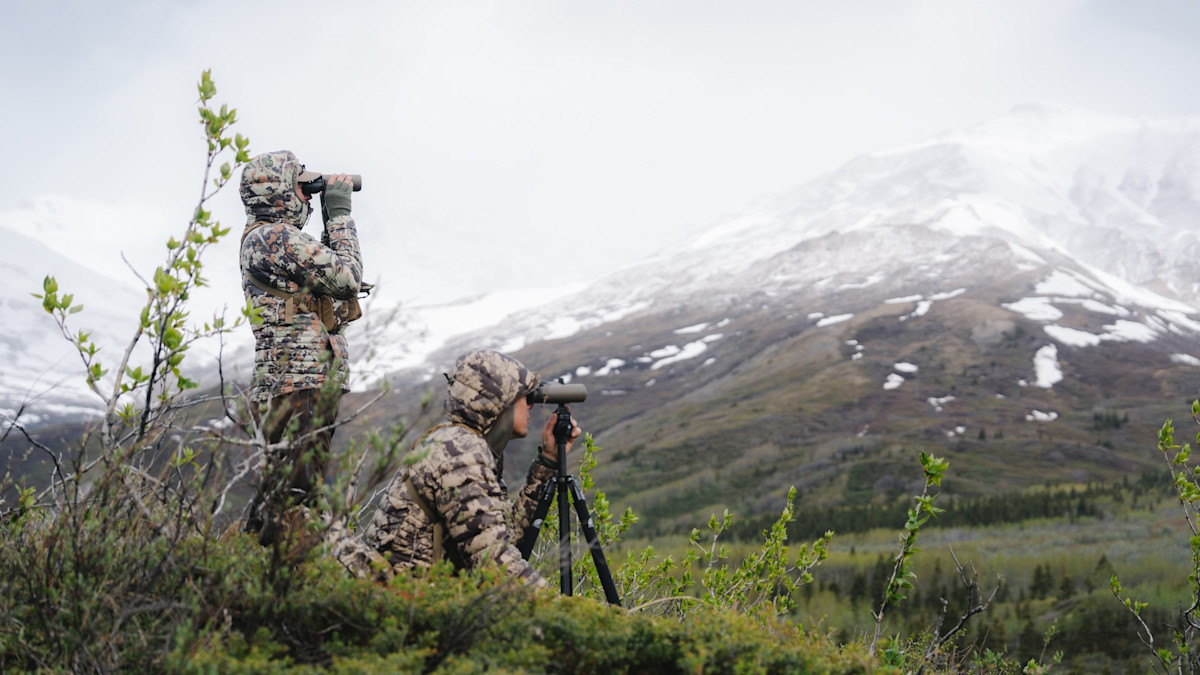

On October 2, Sen. Mike Lee (R-UT) announced the Border Lands Conservation Act, a bill that would allow the Department of Homeland Security to enter into cooperative agreements with the Agriculture and Interior secretaries to build roads, install “tactical infrastructure,” and operate aircraft and motorized vehicles on any federal wilderness areas on the U.S. border that lie within a 100-mile radius from that border. Lee and cosponsors have marketed the bill, which would amend the Wilderness Act of 1964 to make all this possible, as a measure to strengthen U.S. border security.
It is unclear whether other federal public lands that share boundaries with border lands and fall within the 100-mile radius would also be subject to the rule change. (Sen. Lee’s office did not reply to a request for clarity.) In a press release about the bill, he blames “open-border chaos” for environmental degradation and unsafe conditions on public borderlands.
“Families who want to enjoy a safe hike or campout are instead finding trash piles, burned landscapes, and trails closed because rangers are stuck cleaning up the fallout,” he writes. “Cartels are exploiting the disorder, using these lands as cover for their operations. This bill gives land managers and border agents the tools to restore order and protect these places for the people they were meant to serve.”
In the Lower 48, a distance of 200 miles — 100 from each border — constitutes anywhere from roughly 12% to 17% of the distance from Canada to Mexico as the crow flies. Additionally, much of Alaska’s border with Canada falls along the edge of a wilderness area.
If the bill gets anywhere, the amount of wilderness impacted in these regions could account for almost triple the acreage of Lee’s budget reconciliation selloff proposal. In the Lower 48, a known total of 3,318,773 acres across Washington, Minnesota, California, and Arizona would be impacted. Alaska would provide an additional 6,242,479 acres across five wilderness areas. This total does not include Alaska’s two largest border wilderness areas — Wrangell-St. Elias (9.4 million acres) and Mollie Beattie (8 million acres) — where single units of continuous wilderness stretch further than 100 miles from the border. This makes it hard to accurately calculate how much additional acreage would be impacted in these two units, but the order of magnitude would likely be in the tens of millions.
The following totals come from data and a map maintained by Wilderness Connect.
Northern Border
Washington:
- Mount Baker Wilderness - 119,966 acres
- Stephen Mather Wilderness - 638,173 acres
- Pasayten Wilderness - 531,325 acres
- Salmo-Priest Wilderness - 41,307 acres
Minnesota:
- Boundary Waters Canoe Wilderness Area - 816,244 acres
Southern Border
California:
- Otay Mountain Wilderness - 16,893 acres
- Jacumba Wilderness - 31,358 acres
Arizona:
- Cabeza Prieta Wilderness - 803,408 acres
- Organ Pipe Cactus Wilderness - 312,600 acres
- Pajarita Wilderness - 7,499 acres
Lower 48 total: 3,318,773 acres
Alaska (bolded entries would be subject in their entirety):
- Wrangell St. Elias Wilderness - 9,432,000 acres
- Mollie Beattie Wilderness - 8,000,000 acres
- Glacier Bay Wilderness - 2,664,876 acres
- Russell Fjord Wilderness - 348,626 acres
- Tracy Arm-Fords Terror Wilderness - 648,883 acres
- Stikine-LeConte Wilderness - 436,084
- Misty Fjords National Monument Wilderness - 2,144,010 acres
Known total: 6,242,479 acres
The language of the bill also stops both the Department of Agriculture and the Department of the Interior from impeding, prohibiting, or otherwise interrupting DHS activity in these places as long as that activity is related to the prevention of unlawful entries into the United States — either by people deemed “terrorists and unlawful aliens” or by “instruments of terrorism, narcotics, and other contraband.”
In other words, it gives DHS complete freedom to conduct these activities without federal land management agency involvement. (The National Environmental Policy Act still requires DHS to analyze the environmental impacts of its proposed projects and conduct a public comment period.)
The Trump administration’s definition of “terrorist” has proven subjective in recent months. In September, he used the phrase to refer to “antifa,” an umbrella term for a decentralized political movement that opposes fascism and far-right ideology. More recently, he and Defense Secretary Pete Hegseth used the phrase to describe occupants of boats the administration claims is smuggling drugs from Venezuela across the Caribbean Sea. At the time of publication, U.S. Special Forces have killed 27 boat occupants in a series of attacks on five vessels, prompting the early retirement of U.S. Southern Command leader Admiral Alvin Holsey. The vague nature of a phrase like “other contraband” also raises questions. Lacking more concrete definitions, DHS could potentially interpret these terms in myriad ways, then use those interpretations to justify developments in wilderness areas.
With the exception of conducting searches on foot, Lee’s suggested list of surveillance measures consists of actions that are either illegal or highly regulated on all federal public lands, especially those designated as wilderness. This designation can be applied to “an area of undeveloped Federal land retaining its primeval character and influence, without permanent improvements or human habitation, which is protected and managed so as to preserve its natural conditions,” according to the Wilderness Act.
Few better examples of wilderness come to mind than the Boundary Waters Canoe Wilderness Area in northern Minnesota. Paddlers, anglers, hunters, Tribal communities, and local members of the tourism economy have spent the last few years working to stop a proposal for a copper-nickel mine upstream from the wilderness area. Now, Lee’s proposal has become another concern, Sen. Tina Smith (D-MN) tells MeatEater.
“Americans want to see our public lands protected, but Senator Lee’s bill overwrites important protections in the original Wilderness Act and could result in serious harm to our wild places, including the Boundary Waters,” Smith writes in an emailed statement. “The Boundary Waters, like so many of our national parks, is one of this country’s great natural treasures, and I’m going to do everything in my power to fight any piece of legislation that would threaten this precious place.”
This bill does more than just reaffirm Lee’s desire to wrangle more centralized, uniform control over what happens on federal public lands. It also puts him back under the microscope of a public lands advocacy community that has proven pan-partisan time and time again. Earlier this year, his proposal to sell off over 3 million acres of federal public lands through the budget reconciliation process was opposed by one of the most politically diverse protests in recent outdoors history.
This could be bad news for someone who was elected to represent a constituency where 56% of voters oppose giving state governments control of federal lands, according to the 2025 State of the Rockies poll from Colorado College. Utah ranks the lowest of eight polled Western states in this category, but even the Latter-day Saints' influence over Utah politics is growing more interested in environmentalism and public lands stewardship as a more climate-conscious generation comes of age. Now halfway through his third six-year term, whether Lee runs again is yet to be seen. If he does, the Utah he will need to win over in 2028 — a presidential election year, no less — will be different than the Utah that re-elected him in 2022.
This pattern begs a simpler question. Who is Lee trying to please? With every proposal to retool the federal land management system, he loses more clout with the public lands community. Western Republicans from both chambers of Congress have taken steps to distance themselves from this effort, which has quickly become one of the most weight-bearing beams of Lee’s platform. (Remember when a bunch of them helped form a bipartisan House caucus to fight the very idea?)
Meanwhile, the elected officials who do publicly back these ideas are scarce. In the BLCA, for example, his cosponsors include just a handful of Republicans from deep-red states that lack any border real estate — Wyoming, Arkansas, Mississippi, Florida, and Tennessee — plus Texas Sen. Ted Cruz, who took almost two weeks to join as a cosponsor. (Texas lacks designated wilderness along its southern border.)
And yet, the odds that Lee — or any other elected official who supports his approach to federal public lands — will face backlash in the voter booth are slim, says longtime public lands journalist Hal Herring.
“He will pay no price,” Herring tells MeatEater. “How many of these [lawmakers] will actually be voted out by single-issue voters for public lands? That demographic is not big enough for any of them to worry about. They’re counting on the fact that we the people are not devoted enough to this topic … because we’ve had access to public lands for so long, we can’t imagine them changing.”
Even with these grim odds, it’s unclear whether the Border Lands Conservation Act will find traction in Congress. Its first stop is the Senate Energy and Natural Resources Committee, which Lee chairs. Other ENR members who cosponsor the bill include Sen. John Barrasso (R-WY), Sen. Cindy Hyde-Smith (R-MS), and Sen. Tom Cotton (R-AR). The next ENR committee hearing has yet to be scheduled, according to the committee’s website.
Stay in the loop with The MeatEater Newsletter
Shop
Related

Public Lands & Waters
[UPDATE] This Map Shows The 250+ Million Acres of Public Land that Could Be Sold Under New Bill

Public Lands & Waters
28 Million Acres in Alaska Could Open to Development

Public Lands & Waters
Mike Lee’s Latest Bill Targets Over 9.5 Million Acres of Wilderness in U.S. Borderlands
The comments section requires Functionality cookies. Please enable Functionality cookies in Cookie Settings to view this content.